Blog

Dear Policymakers: Energy Codes Are Not What’s Making Housing Unaffordable in the US

|

The lack of affordable housing combined with a housing shortage is absolutely a national concern. As policymakers search for solutions though, building codes, particularly energy codes, are often incorrectly blamed for this housing crisis. However, rolling back the energy codes will not solve this problem.

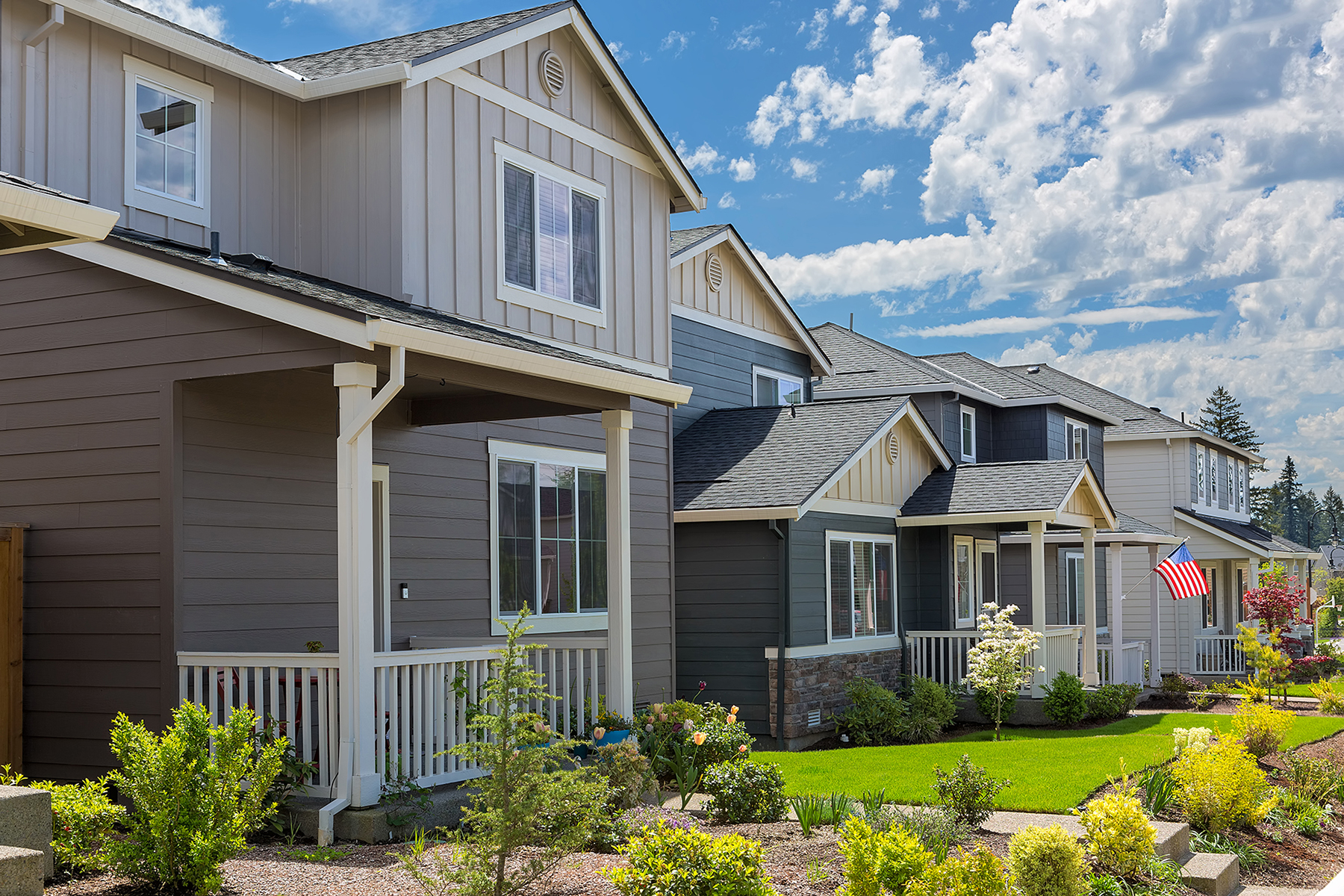
Row of newly built single-family homes with front porches, landscaped yards, and sidewalks in a suburban neighborhood under a bright blue sky.

Click here to jump to our template for writing to your representative.

It’s an argument that sounds logical: If the new energy code requires more insulation, construction costs increase, and new construction homes become more expensive to buy.

But is that incremental cost the primary driver causing housing to be unaffordable? Of course not.

Energy Code Adoption vs. Home Prices by State

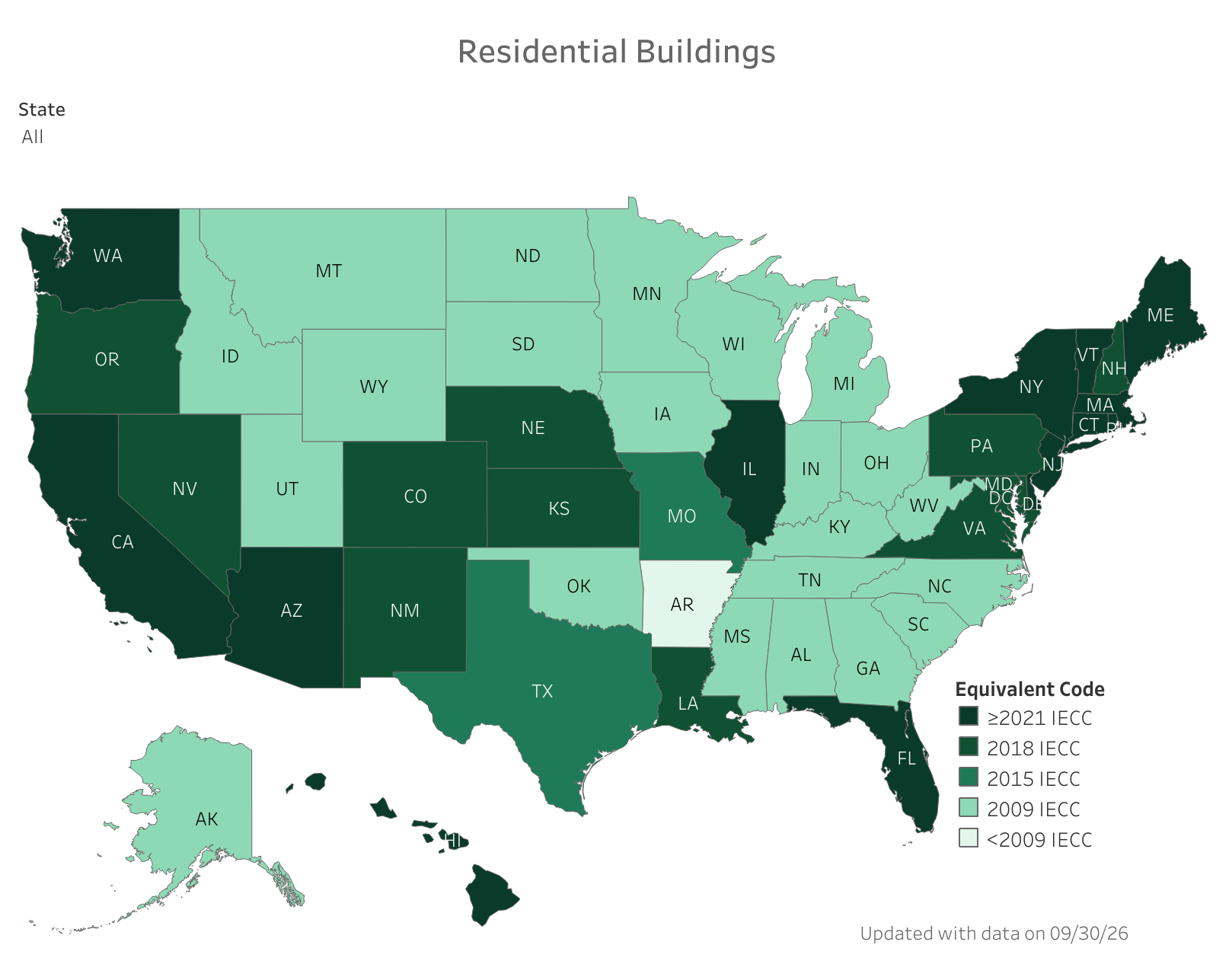
If it were true, states that have not adopted recent energy codes (shown in light green on the map below) would not have housing shortages and their homes would be very affordable. Right? And existing homes would not have increased in price at all since the year they were constructed, because the cost to meet the latest energy code doesn’t impact them.

U.S. map showing residential building energy code adoption by state as of September 30, 2026. States are color-coded from pre-2009 IECC standards to 2021 IECC or newer, with many West Coast, Northeast, and Mid-Atlantic states shown at the highest code levels.
Source: Building Energy Codes Program – State Portal – U.S. Department of Energy (DOE)

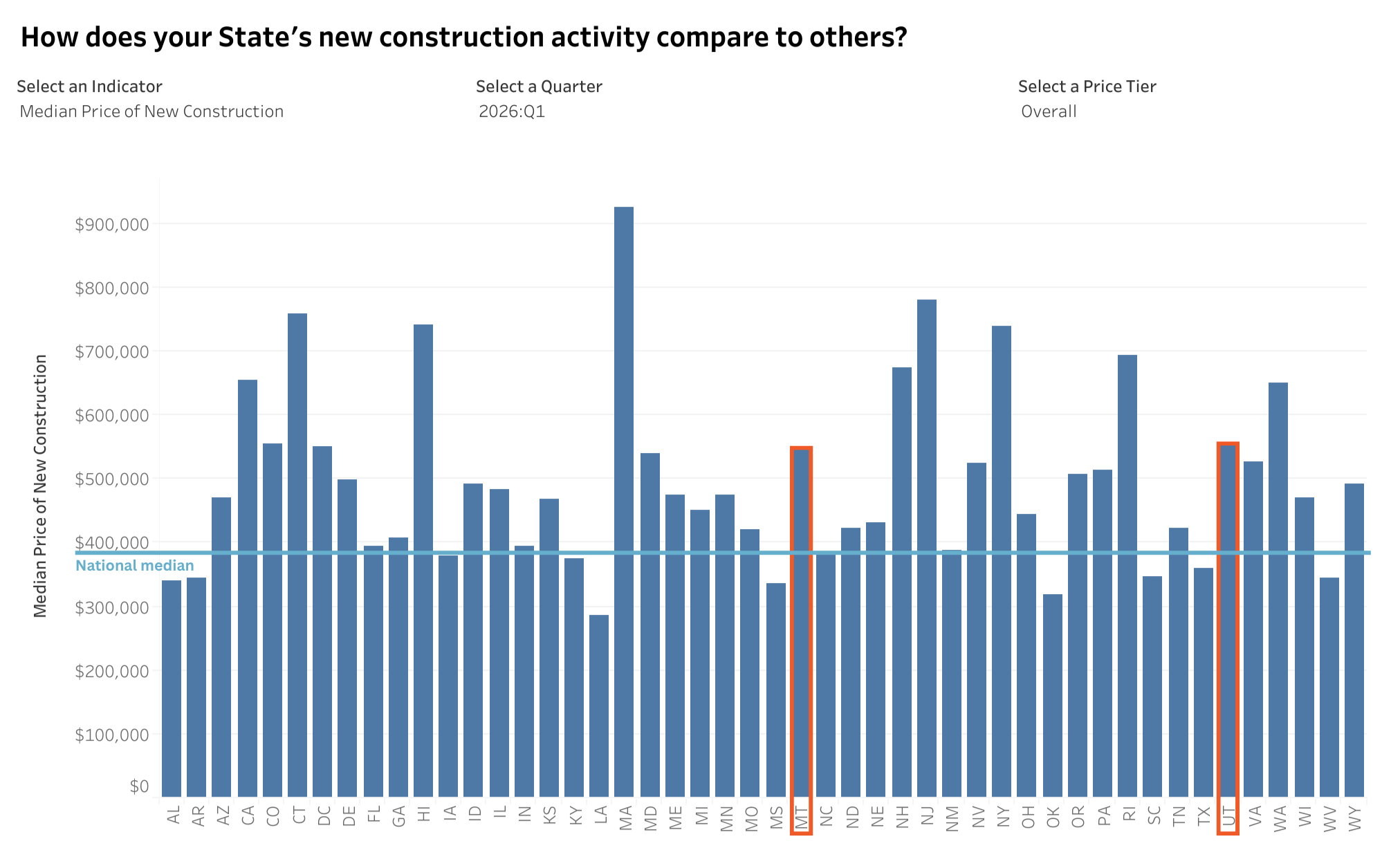
The AEI-Zillow New Construction Sales Index tracks new housing construction across the US, including the median price of a new home by state (among many other data points). The chart below illustrates this.

By the logic explained above, states like Montana or Utah that use the 2009 IECC should have lower median prices. However, these states have some of the highest—$549,600 and $557,300, respectively—in the country. (You can use the AEI-Zillow New Construction Sales Index interactive tools to look at median price of new construction by state.)

Bar chart comparing median new-construction home prices by state in the first quarter of 2026. The national median is approximately $385,000. Prices vary widely across states, with Massachusetts among the highest and Louisiana among the lowest. Utah and Montana are highlighted at roughly $555,000 and $550,000, respectively.
Source: AEI-Zillow New Construction Sales Index – AEI

But we do also see dark green states with high median prices. Is their adoption of more advanced code really to blame? The University of Alabama recently looked into this exact question.

Their research examined 45 instances where newer residential building codes were adopted across 26 states using millions of home sales transactions. The study found that most code adoptions were not associated with statistically significant increases in home prices.

In fact, when all adoptions were analyzed collectively, the overall impact on the price of newly constructed homes was statistically indistinguishable from zero.

So, if the energy codes aren’t driving high housing prices, what is?

The Real Cost Drivers Making Housing Unaffordable

Many economists have already pointed out that it’s fundamentally a supply-and-demand issue. Decades of under-building, combined with strong demand, have contributed to high home prices.

It’s also true that the cost to construct homes has increased, and there are soft costs when adapting to a newer energy code, but studies like the one we mentioned earlier conducted by U of A, have not found the energy code to be a contributing factor to the housing crisis.

In a recent interview, even Jeff Bezos agreed that this was a supply-vs-demand issue and never mentioned the energy code as a factor. He then cited the City of Austin, Texas, as a successful example where policies have spurred construction (increasing supply) and it helped lower home prices. Spoiler alert: the City of Austin has required compliance with the 2024 IECC since July 2025 (PDF).

The other factors driving higher housing costs on the supply-side:

  • Labor shortages and wage escalation
  • Land acquisition costs and permitting delays
  • Material price volatility and supply-chain disruptions from tariffs and wars
  • High development financing costs

Further limiting the supply side of the equation is that the sale of existing homes has decreased, as current homeowners are reluctant to sell their homes that locked in lower interest rates.

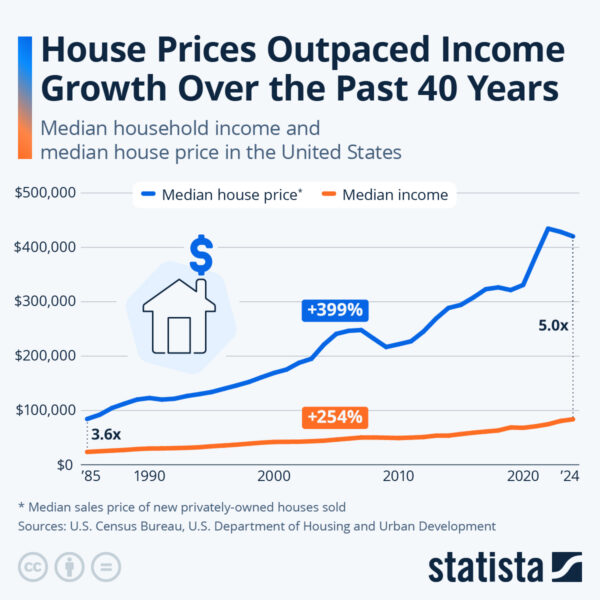
On the homebuyer side, high interest rates, increasing insurance premiums, and low median household incomes have more do to with the housing affordability crisis than the energy code.

Line chart comparing U.S. median house prices and median household income from 1985 to 2024. House prices increased approximately 399%, growing from about $85,000 to more than $420,000, while household income increased about 254%, from roughly $24,000 to $84,000, showing housing costs outpaced income growth.
Source:  House Prices Outpaced Income Growth Over the Past 40 Years – Statista

Show Me the Data

Everyone agrees that housing has become more expensive to build. When government studies point to the energy code as the reason, the knee-jerk reaction is to stop adopting the latest energy codes. But will that solve the problem? Let’s look at some real data.

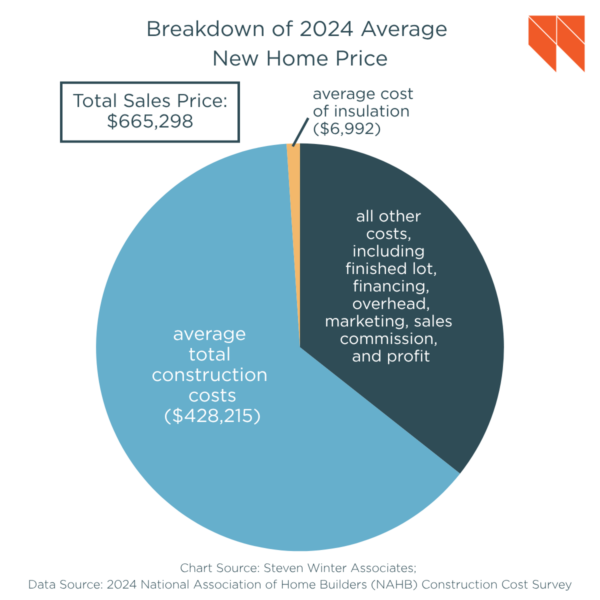
The 2024 National Association of Home Builders (NAHB) Construction Cost Survey breaks down the sales price of a new single-family home constructed in 2024.

Using their average sales price of about $665K, the “construction” costs are estimated to be about $428K (64% of the sales price). Finished lot costs accounted for $91K (13% of the sales price) and profit was $73K (11%).

The report breaks down everything that falls under the $428K of construction costs, many of which are necessary costs for any home, regardless of the energy code.

For the reasons mentioned above, costs for many of these line items have increased significantly over time and can add tens or even hundreds of thousands of dollars to the cost of delivering new housing. Yet energy codes have received a disproportionate share of the blame.

Sure, the energy efficiency measures in a home have also increased in cost, but they are not the biggest component of housing construction as shown in the report and they also reduce the homeowner’s utility bills.

Show Me the Math

Let’s look at the line item for insulation.

Why that item? If you are not familiar with the energy code, while the IECC can set a minimum for the level of insulation for a home, it cannot mandate high-efficiency HVAC or hot water systems. Therefore, when arguments are made regarding the cost of meeting energy code requirements, often folks are pointing to the cost of insulation.

And we get it. Insulation is not flashy, and it’s not something the average homebuyer gets excited about, but insulation is fundamental to building homes that are comfortable and have lower utility bills.  

From the NAHB report, the insulation line item for a $665K home is $6,992. Without the energy code, the builder certainly could save that money by not installing any insulation, and the unknowing homeowner will end up with higher energy bills down the road.

Pie chart showing the breakdown of the average 2024 new-home sales price of $665,298. Construction costs account for $428,215, insulation accounts for $6,992, and all other costs make up the remaining portion.

But does eliminating the cost of insulation make this home “affordable”? Let’s do some math. (Note: We know the majority of builders are not suggesting homes without any insulation, so the savings would likely be even less than shown.)

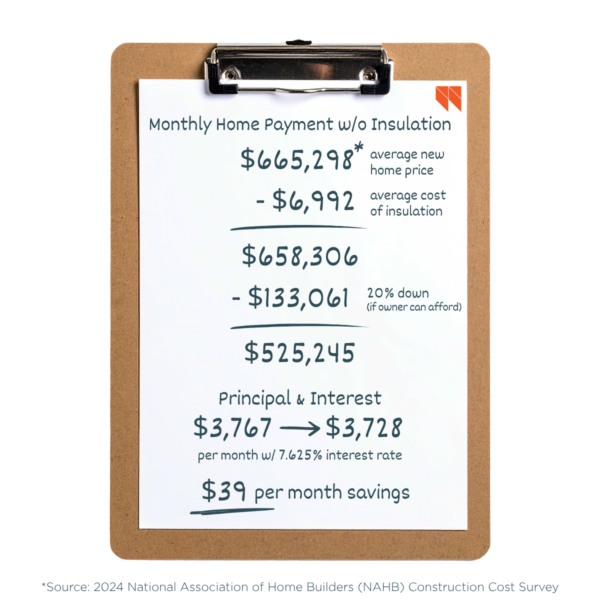
$665,298 (average new-construction home price) – $6,992 (average cost of insulation) = $658,306.

With insulation, the monthly payment for a 30-year fixed-rate mortgage, after 20% down at today’s 7.625% interest rate, is $3,767 for just principal and interest (P&I). First of all, if we’re talking about affordability, how many homeowners have access to $133,061 for that down payment? Second, even after removing all the insulation, the home price only drops by $6,992, and the monthly P&I payment only drops $39 to $3,728.

Clipboard graphic showing the effect of insulation costs on monthly mortgage payments. Starting with an average new-home price of $665,298 and insulation cost of $6,992, the monthly principal-and-interest payment decreases from $3,767 to $3,728, yielding estimated savings of $39 per month.

$39.

Again, we know builders are not suggesting removing all insulation from the home, so this homebuyer “savings” would likely be even lower. However, any reduction in insulation, also increases heating and cooling bills, further eroding the “savings” to the homeowner.

The point is, in the grand scheme of things, saving $20-40 per month is not the difference between this $650K home being affordable or not.

To put it in context of the other drivers of housing unaffordability, let’s look at the impact of interest rates on monthly payments. For this home, a 1% drop in the interest rate results in savings of $359 per month, which is almost 10% of their monthly payment. Not that we can wave a magic wand and lower interest rates, but the point is that the impact of these two factors is very different.

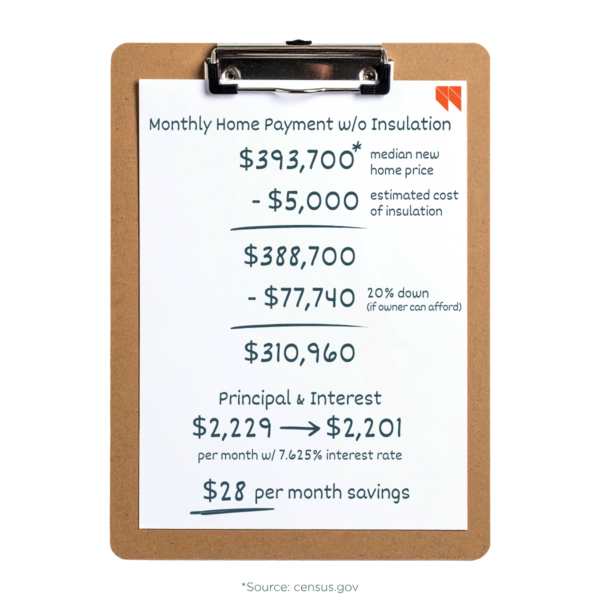
To be fair, not all homes are priced at $650K, so let’s re-do the math and use the August 2026 median home price of $393,700 from a different source: census.gov.

A home at this price has a P&I of $2,229 per month. We’ll knock $5,000 off the price to represent cost savings to build to an older code. In this scenario, the homebuyer saves $28 dollars per month on their mortgage but then pays a bit more on their utility bills.

Clipboard graphic illustrating the impact of insulation on home affordability. Based on a median new-home price of $393,700 and an estimated insulation cost of $5,000, the monthly principal-and-interest payment decreases from $2,229 to $2,201, resulting in estimated savings of $28 per month.

If they instead had access to a lower interest rate (6.625% instead of 7.625%), they would save $212 dollars per month.

While it’s a convenient punchline in an important election year to blame the energy code, the math is not mathing.

What Will Help Make Housing More Affordable?

While lowering interest rates by 1% would certainly improve buyer purchasing power, monetary policy is complex, driven by broader macroeconomic forces, and outside the direct control of state or local lawmakers.

Rather than waiting for market-wide rate shifts, what concrete, actionable policy levers can municipal and state governments pull today to lower housing construction costs?

1. Streamline Permitting & Administrative Review Timelines

Carrying costs during protracted municipal review processes add thousands of dollars per month in interest on land development loans. A study by the National Association of Home Builders (NAHB) found that government delays, fees, and exactions account for over 23% ($93,000+) of the final price of a new home. Guaranteeing accelerated 30-day plan reviews for energy-efficient designs saves developers far more in financing costs than removing insulation.

2. Modernize Municipal Impact Fees

When a builder constructs a new home, local governments assess one-time “impact fees” and utility connection charges to fund surrounding public infrastructure—such as expanding roads, water mains, parks, and schools. In most jurisdictions, these are levied as flat, fixed fees per lot, forcing a modest 1,200 sq. ft. starter home to carry the exact same fee burden as a 5,000 sq. ft. luxury estate.

Rather than relying on regressive flat fees, municipalities can right-size these charges by scaling them according to home square footage and projected utility demand. Scaling impact fees lowers upfront development costs for smaller, more affordable entry-level housing while ensuring local governments retain the revenue needed to maintain critical infrastructure. According to research from the National Association of Home Builders (NAHB), government-imposed development fees and utility connection charges add an average of $24,000+ to the cost of constructing a single-family home.

Call to Action: Contact Your Local and Federal Elected Officials

Housing affordability deserves serious attention.

But solving the problem requires accurately identifying all of its causes, not just using the energy codes as a scapegoat for our broader housing market failures.

The latest research suggests that modern code adoption is not a major driver of housing prices. We have a housing shortage, so where demand is high and supply is low, prices go up. To add supply, we need more new construction homes, but they are challenged by rising land costs, financing expenses, labor shortages, material volatility, increasing insurance costs, infrastructure requirements, and costly permitting delays.

Homebuilders are also leaning toward building larger homes to increase profits, which further limits the affordable housing stock available to low- and median-income homebuyers.

If the goal is to make housing more affordable to build, those are the challenges that deserve the attention of our policymakers.

Blaming the energy codes may be a convenient talking point, but constructing homes that are less efficient is not going to solve the affordability crisis.

What can you do about it? You are represented by one person in the US House of Representatives. Help them understand this. Find them here by entering your zip code and share this article with them or send the shorter version below.

Here’s our template for writing to your representative:

Dear Representative,

I am considering who should serve as my Representative in the upcoming election on November 3rd. Solving the housing affordability crisis is a bipartisan issue and I want a representative that questions divisive statements and insists on following the data. This crisis will not be solved by abandoning our adoption of the latest energy code. The energy codes are designed to be cost-effective, meaning while they may cost something up front, the energy saved by the homebuyer pays for that cost over a few years.

Still, new energy codes are often blamed for housing affordability challenges, but the data doesn’t even support that conclusion. A recent University of Alabama study found no systematic increase in home prices following code adoption. Higher costs to construct homes are being driven far more by land use laws, labor shortages, supply-chain instability, increased costs for financing & insurance, and permitting delays. And families cannot afford new construction homes, or existing homes, due to high interest rates, large down payments, increasing insurance premiums and low wages.

I hope as my representative you will vote in favor of policies that support the adoption of the latest energy codes and policies that address the issues above since they will actually increase the affordability of housing.

Have questions about residential energy code compliance? Contact SWA anytime.

Author: Gayathri Vijayakumar, Principal Mechanical Engineer at SWA